
By Varun Modgill ·
How to Choose Graduate Recruitment Software: Six Questions That Separate Fair Hiring from Fast Hiring
India admitted 12.53 lakh BTech students in 2024–25, an eight-year high, according to AICTE. Yet centrally funded institutes like IITs, NITs, and IIITs offered roughly 67,000 seats in 2026.
More than nine in ten engineering students study somewhere else.
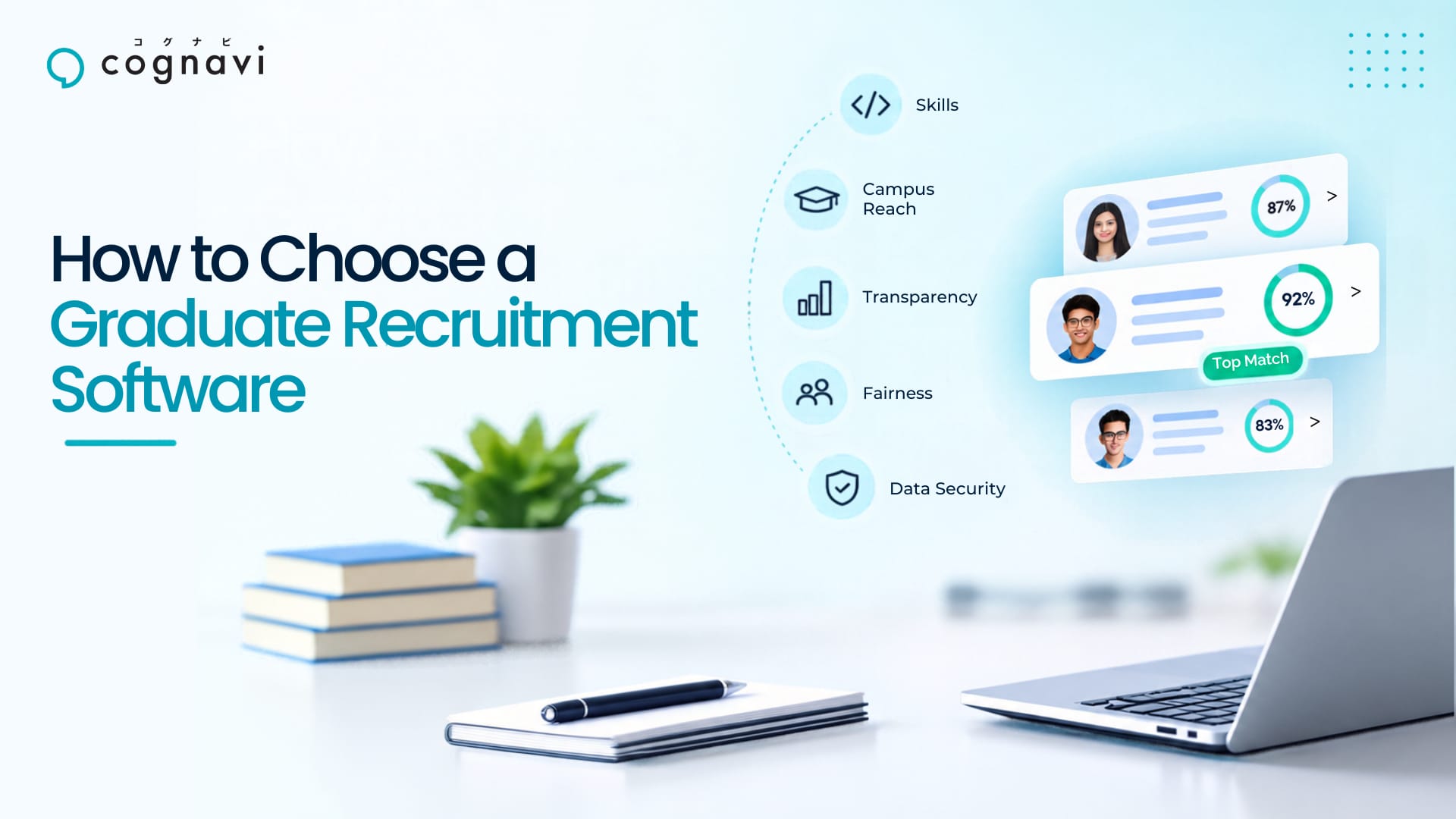
For decades, campus recruitment relied on an unwritten convention: a prestigious college brand served as a proxy for engineering capability. Early graduate recruitment software codified this assumption into rigid filters for institutional tiers, CGPA cutoffs, and resume keywords and modern recruitment automation now executes those filters at scale.
Then candidates weaponized generative AI to game those screeners. Today, bot resumes clash with bot filters while recruiters evaluate documents written for algorithms. The hiring signal is dead. Early-career talent acquisition leaders reject top non-tier-1 talent unseen while recycling offers across the same dozen campuses.
The fix? Measure un-fakeable proof. Sustainable diversity hiring and effective graduate hiring share one rule: judge what a candidate can build, not where they enrolled. These six questions reveal if a platform can deliver.
1. Does it measure skill, or proxies for skill?
Keyword filters reward resume polish; tier filters reward coaching access. Neither measures engineering capability.
Key Question: Do two candidates with identical skills from different colleges rank equally?
Cognavi Difference: Cognavi’s patented Skill Tree maps coursework, projects, and demonstrated competencies against role requirements. Skill is the signal, not institutional brand.
2. How far does its campus reach extend?
Software can only evaluate candidates within its line of sight. If your university recruiting stops at overcrowded metro campuses, fair scoring won't diversify your pipeline.
Key Question: How many network institutions sit outside Tier-1 metro hubs?
Cognavi Difference: Cognavi’s ecosystem spans 329+ institutions across India, integrating Tier-2 and Tier-3 talent directly into your campus recruitment plan.
3. Can it explain every score?
When candidates or auditors ask why, "the algorithm decided" is an unacceptable liability.
Key Question: Can you inspect the exact competency drivers behind any candidate score?
Cognavi Difference: Cognavi’s AI video interviews pair candidate scores with transparent reasoning, backed by Skill Tree match maps. Every shortlist is defensible.
4. Does it assess fit without stereotyping?
"Culture fit" often masks affinity bias, reducing evaluation to a 20-minute panel impression of "someone like us."
Key Question: Is fit measured via validated instruments, or left to subjective panel intuition?
Cognavi Difference: Cognavi’s Human AI deploys standardized personality and aptitude assessments, enforcing a uniform benchmark for every candidate.
5. Does it evaluate over time, or in one sitting?
Single-session assessments penalize top engineers who simply suffer an off day.
Key Question: Can you evaluate consistency over weeks or months prior to extending an offer?
Cognavi Difference: Cognavi’s Early Access runs 3 to 6 months of structured engagement, ensuring candidates prove technical execution before Day 1.
6. Is candidate data protected to a recognised standard?
India’s DPDP Rules mandate clear, standalone consent notices, with enforcement coming May 2027. That governs every graduate in your funnel.
Key Question: Which certifications does the vendor hold, and how is candidate consent logged?
Cognavi Difference: Cognavi holds ISO/IEC 27001:2022 certification covering all candidate data and assessment outputs.
No tool eliminates bias independently, final decisions require human judgment. However, the right graduate recruitment software removes the proxies that let bias scale unchecked.
Stop playing keyword roulette at the top of your funnel. Choosing a platform dictates what your business notices: institutional prestige or true capability. Choose capability.
Test Cognavi against these six questions on your next campus cycle. Book a demo: https://www.cognavi.com/book-a-demo
Where this goes next
Graduate hiring for enterprisesSee how Skill Tree matching delivers a shortlist of verified engineering graduates instead of a keyword-filtered pile of resumes.
Written by
Varun ModgillManaging Director, Cognavi India
Varun Modgill is Managing Director of Cognavi India, where he leads the skills-first hiring platform connecting engineering graduates, universities and enterprises across India and Japan. He writes on campus hiring, skills-based assessment and the graduate talent market.